TL;DR
Project Overview
Employer
Peers Solutions, a B2B learning platform offering tailored learning paths.
Year
2023
Team
3 developers, 1 product owner, 1 product designer (me), 1 learning instructor
Context & Goals
Most learners were dropping off well before completing their assigned learning paths. My job was to find out why — and whether the platform was part of the problem.
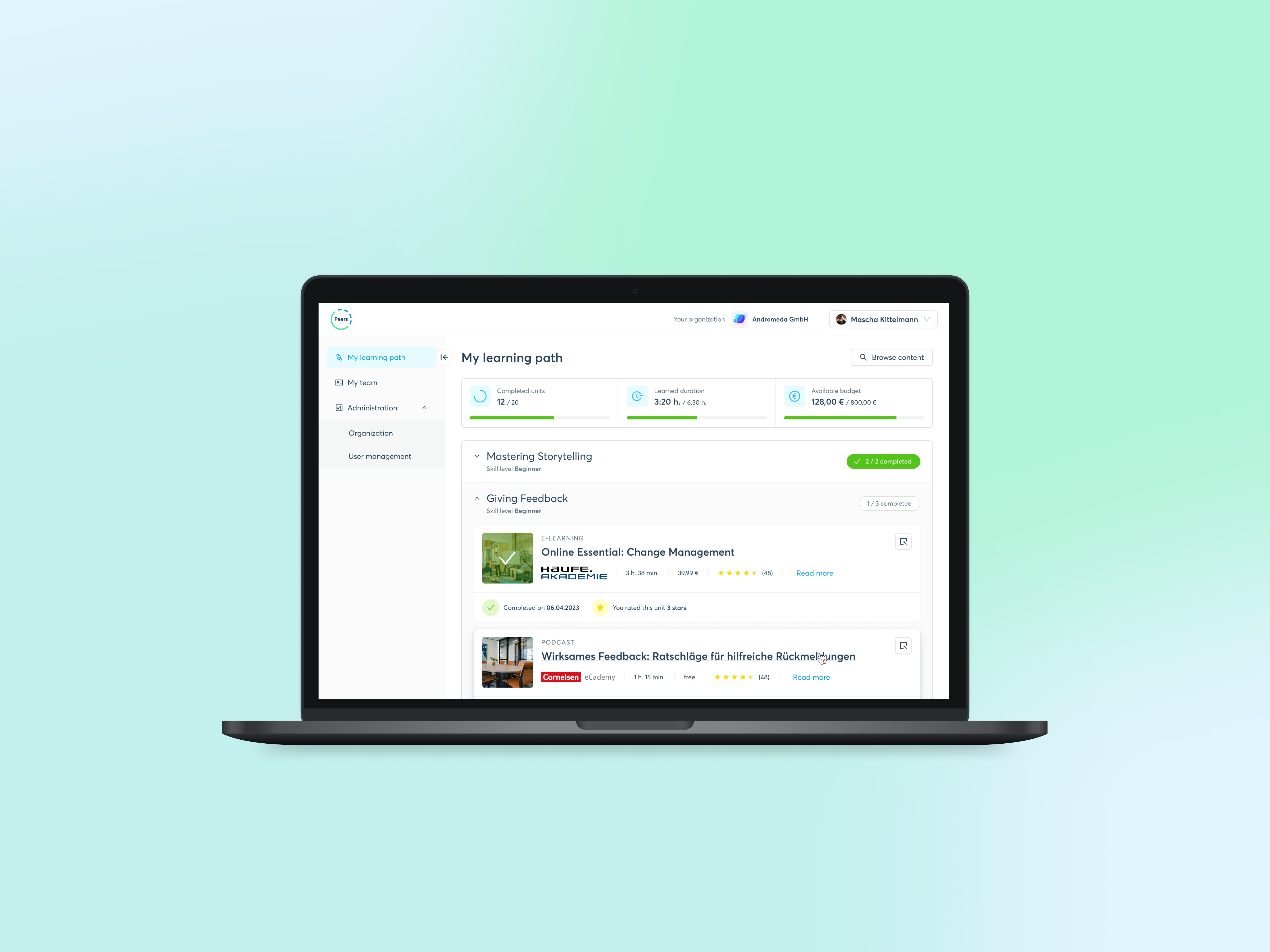
I led the end-to-end process from user research to developer handoff, resulting in a full frontend relaunch of the platform built on the Ant Design UI library.
Company & Product
Peers Solutions was a Berlin early-stage B2B startup that built a corporate learning platform for adult learners — liquidated in 2025.
Clients included well-known organizations such as Gleason, Fraunhofer, and Arkadia.
The core USP was a personalized, individually tailored learning path designed around each user's specific needs and goals. Learning units came from external partners. Peers did not create content itself.
An additional feature provided managers with an overview of their employees' skill development progress.
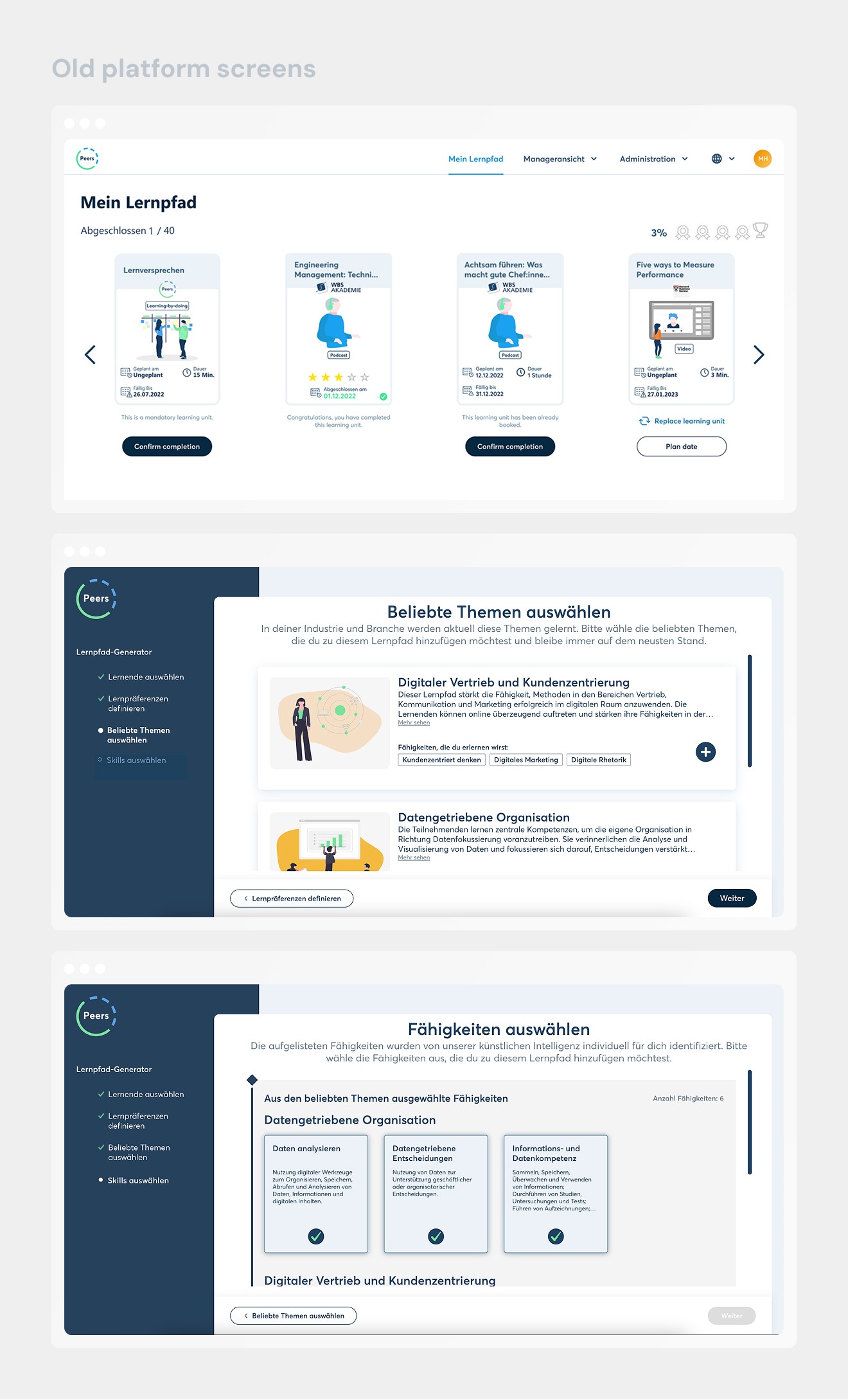
Product status quo when I joined Peers Solutions: No responsive layout, cumbersome UX, no scalable navigation, out-dated UI / look and feel, very limited feature set.
User Research
The completion rate was only slightly higher than 50% in average but with a very high variety – so I conducted 7 interviews with users (names are anonymised) from our major clients regarding following topics:
Peers learning integration in daily work · Quality and rating of the content · Perception of the learning path’s architecture · Perception of reminder mails · User experience of platform and missing functionalities
Use buttons < > to navigate statements


Key Pain Points Identified

#1
Content & Platform
The content (learning units) did not match the skill level at all. Users were bored and did not learn anything new.

#2
Content
The quality of the learning units was not good enough. (Sound or video quality, level of professionality, very abstract theoretical contents)

#3
Platform
Users missed the overall learning objective and were not able to reflect the learned and to allocate learning units to respective skills.
Challenges
With pain point #2 beyond my control, I directed my focus toward pain point #1 and #3.
Our initial idea was to split the single learning path into multiple paths, each tied to individual learning goals. However, this would have required a significant overhaul of the pricing model. After extensive discussions weighing contractual and technical constraints alongside a realistic MVP timeline, we aligned on the following
Possible action items:
Allow users to select or be assigned appropriate skill level
Introduce greater flexibility through option to tailor learning path
Break learning path into skill clusters or chapters
But there was another challenge. While we aimed to give learners more autonomy, we faced another key constraint: the contractual framework required units being scheduled before users could consume them to coordinate acquisition from external providers (internally done by Peers) . That said, learning still required a sequential user flow including crucial steps:
Understand learning content and learning type (important in case user wants to remove or add new units)
Schedule unit (necessary for acquisition)
Being referred to external content provider page & consume unit
Mark unit as completed on our platform (necessary for progress indication)
Rate unit (necessary for our internal review)
Ideation & Information Architecture
Learning path architecture:
Extensive best practice research and competitor benchmarking informed our early design decisions.
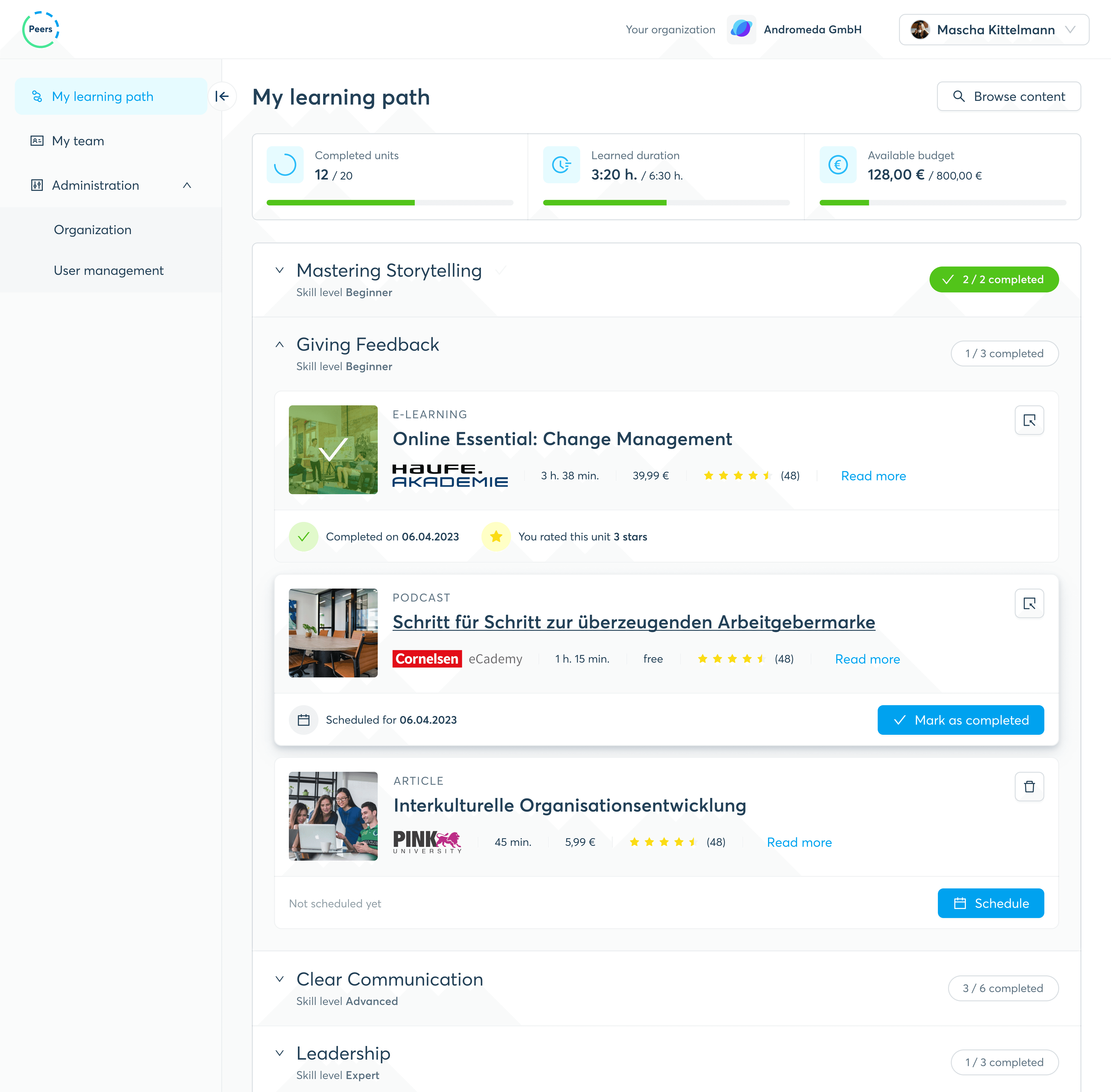
We opted for a vertical learning path layout, as it proved more intuitive to navigate — the original horizontal layout was being perceived as an unconventional structure in user interviews. It also lent itself better to mobile screen sizes, which was a deliberate priority given that several interviewees expressed a desire to learn while commuting.
The multi-step process (see previous chapter "Challenges") created a significant UX challenge, as each learning unit card had to surface a considerable amount of information — including title, provider, duration, overall rating, and learning type — alongside all the necessary action controls.
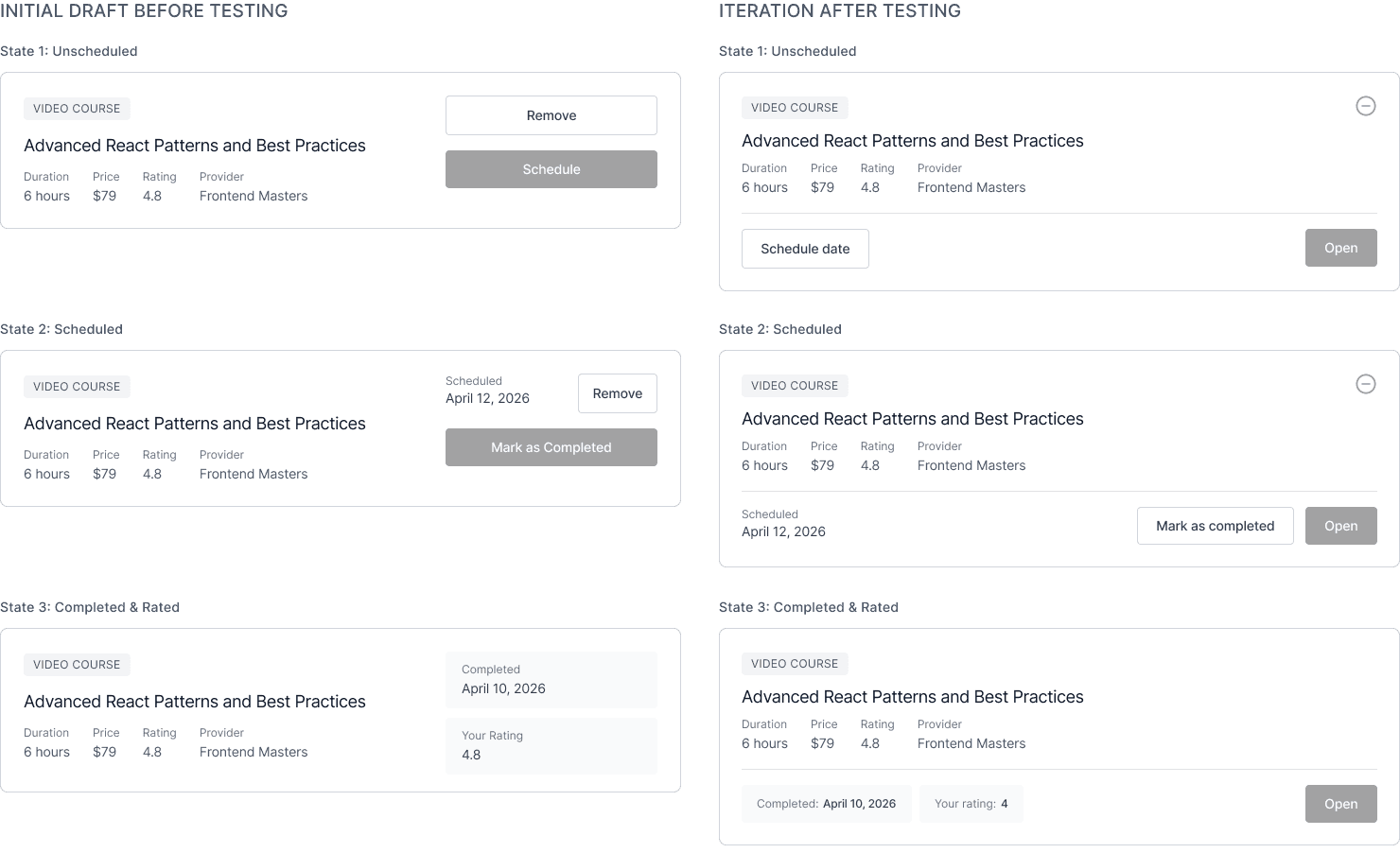
Findings during testing:
It was not sufficiently clear how to navigate to the external unit detail page.
The card layout was perceived as unbalanced and visually unclear at first glance.
Testing with real data revealed insufficient space for titles, which frequently wrapped onto a second line — further adding to the sense of visual imbalance.
Learning path creation flow:
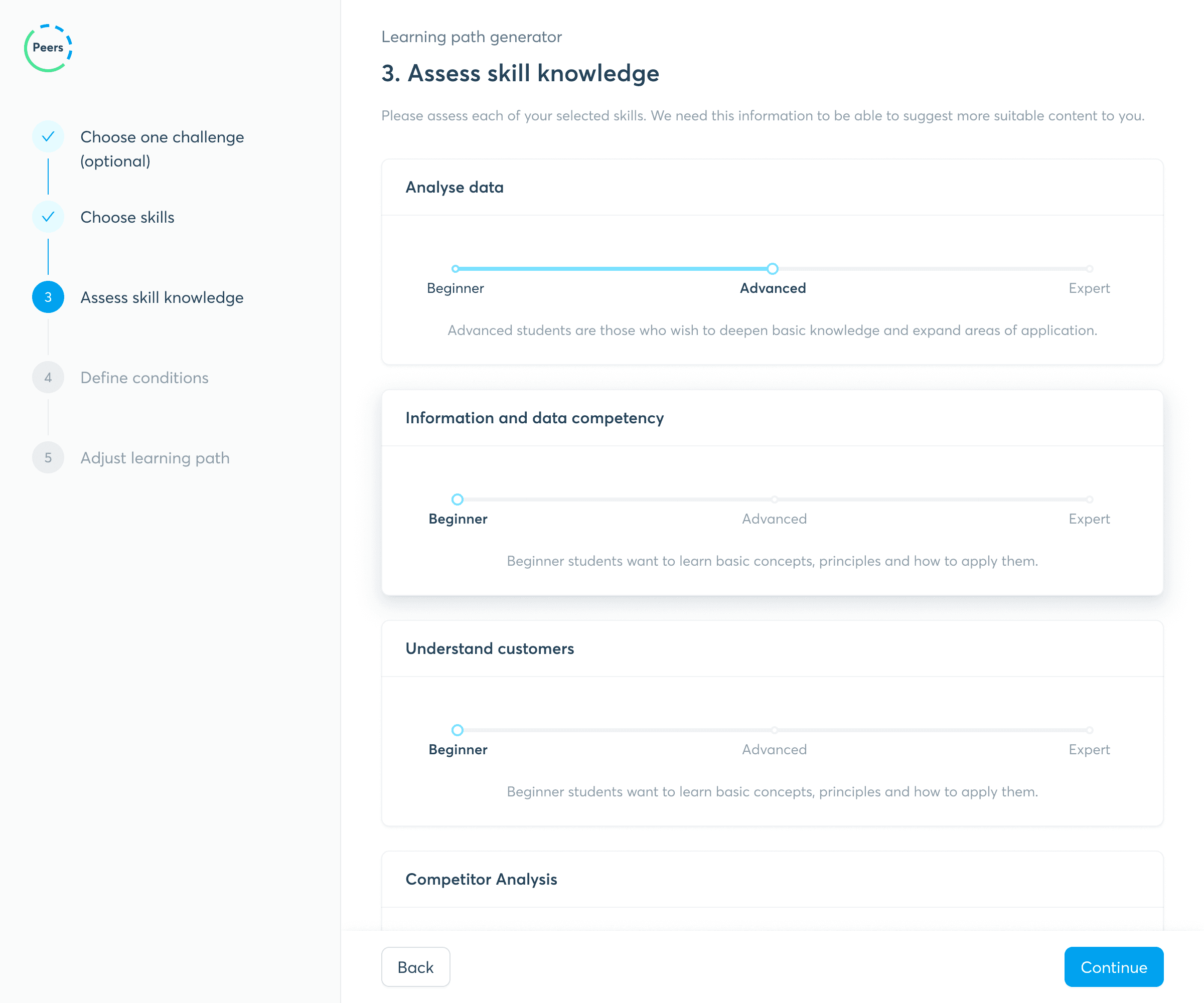
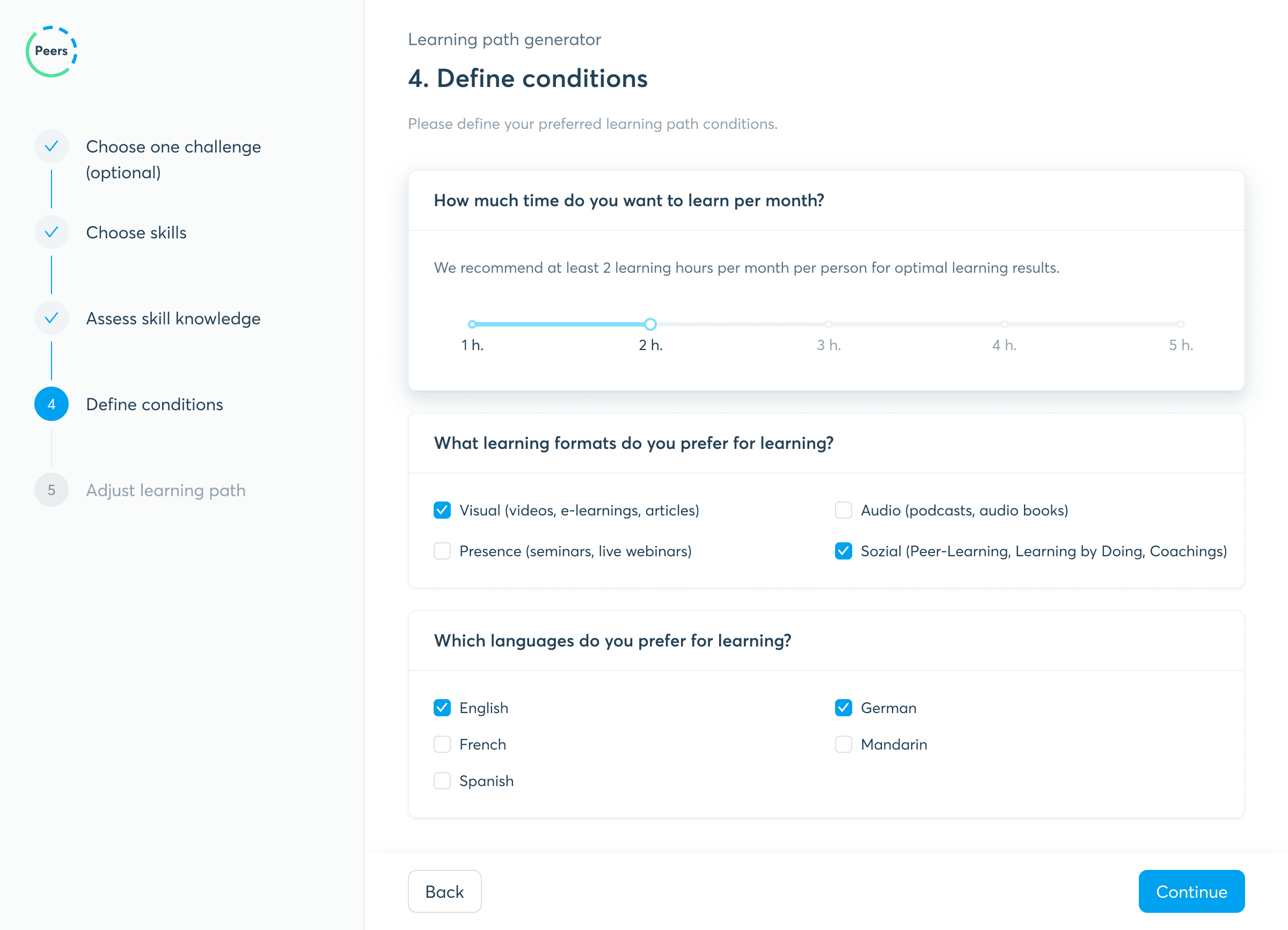
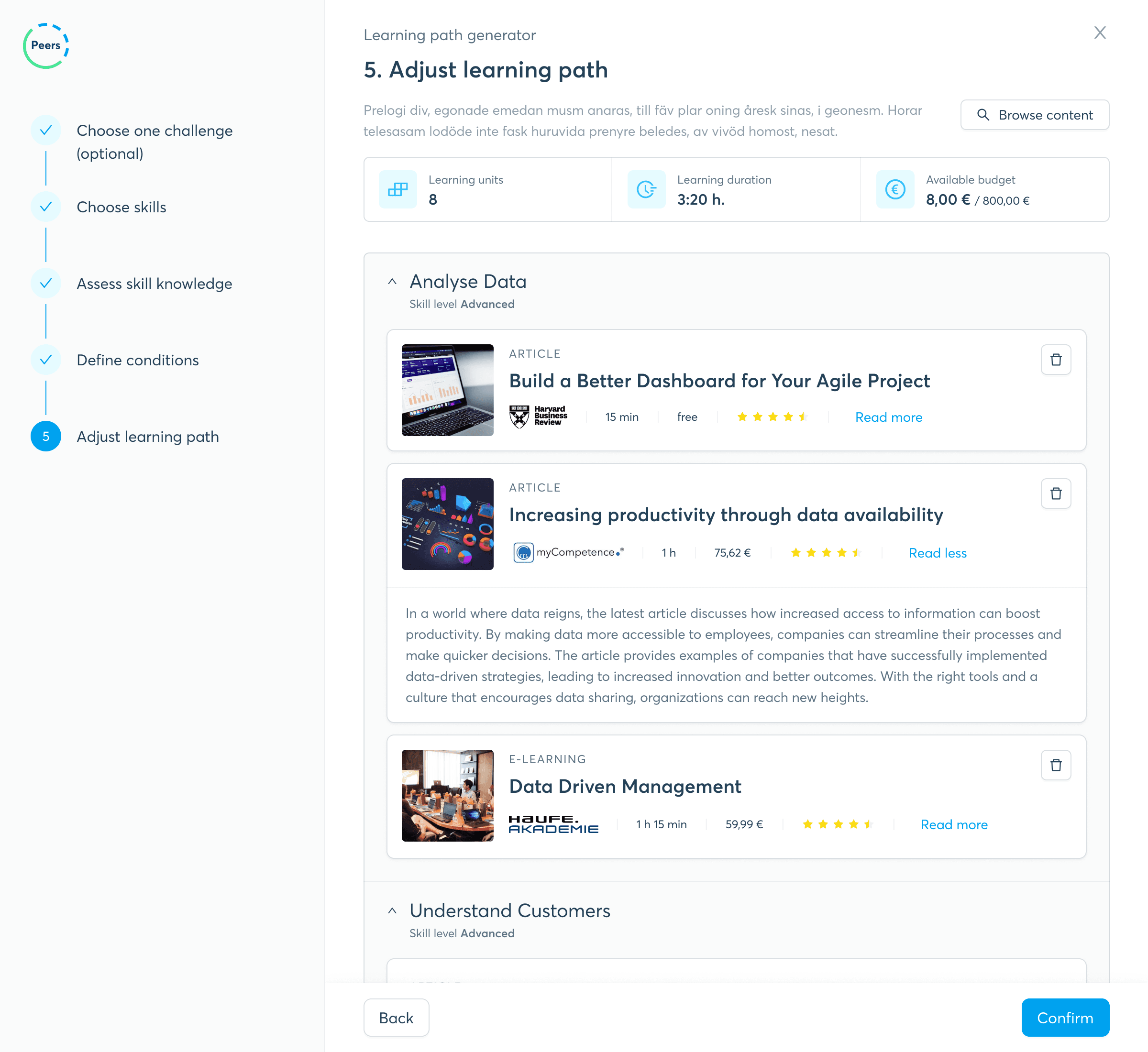
To ensure a more tailored learning experience, we also refined the learning path creation process: in addition to selecting skills, users are now prompted to assess their current proficiency levels and indicate their individual learning preferences.

Interface Design and Final Mockups
Without an established design system or UI library in the beginning, frontend maintenance was inefficient and the interface lacked a modern feel. After careful consideration, we adopted the React UI library Ant Design — streamlining frontend development with predefined components and reducing the risk of inconsistencies.
Use buttons < > to navigate mockups


Impact
Completion rates improved, and usability testing after implementation showed learners could finally orient themselves within the platform — understanding which units built which skills, something that had been invisible before.
Not everything worked: skill-level personalization fell short of expectations, constrained by gaps in our content database rather than the design itself. That distinction matters: Knowing where a design ends and a systemic problem begins is part of the job.
Lessons learned
Never underestimate the value of talking to real users before major UX changes. Their behavior on the platform is only part of the picture — the context around their usage, their daily pressures and routines, can be just as revealing.
However, internal constraints can be equally critical. This project was shaped by significant technical, procedural, and legal limitations. Not every aspect of a product or a service can be fixed, some things simply fall outside your sphere of influence.
Navigating these challenges has sharpened my ability to think across disciplines and well beyond the boundaries of pure UX.
Further screens
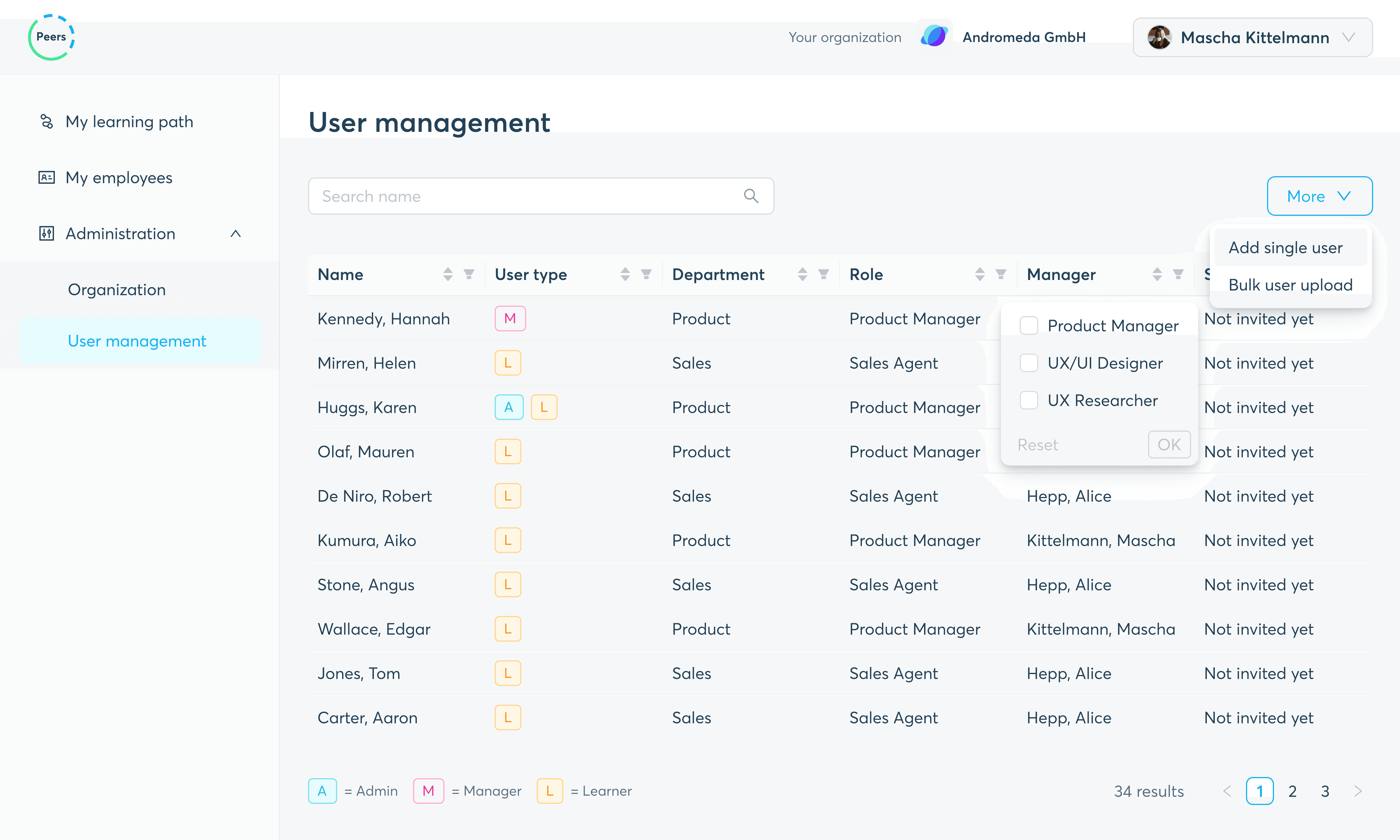
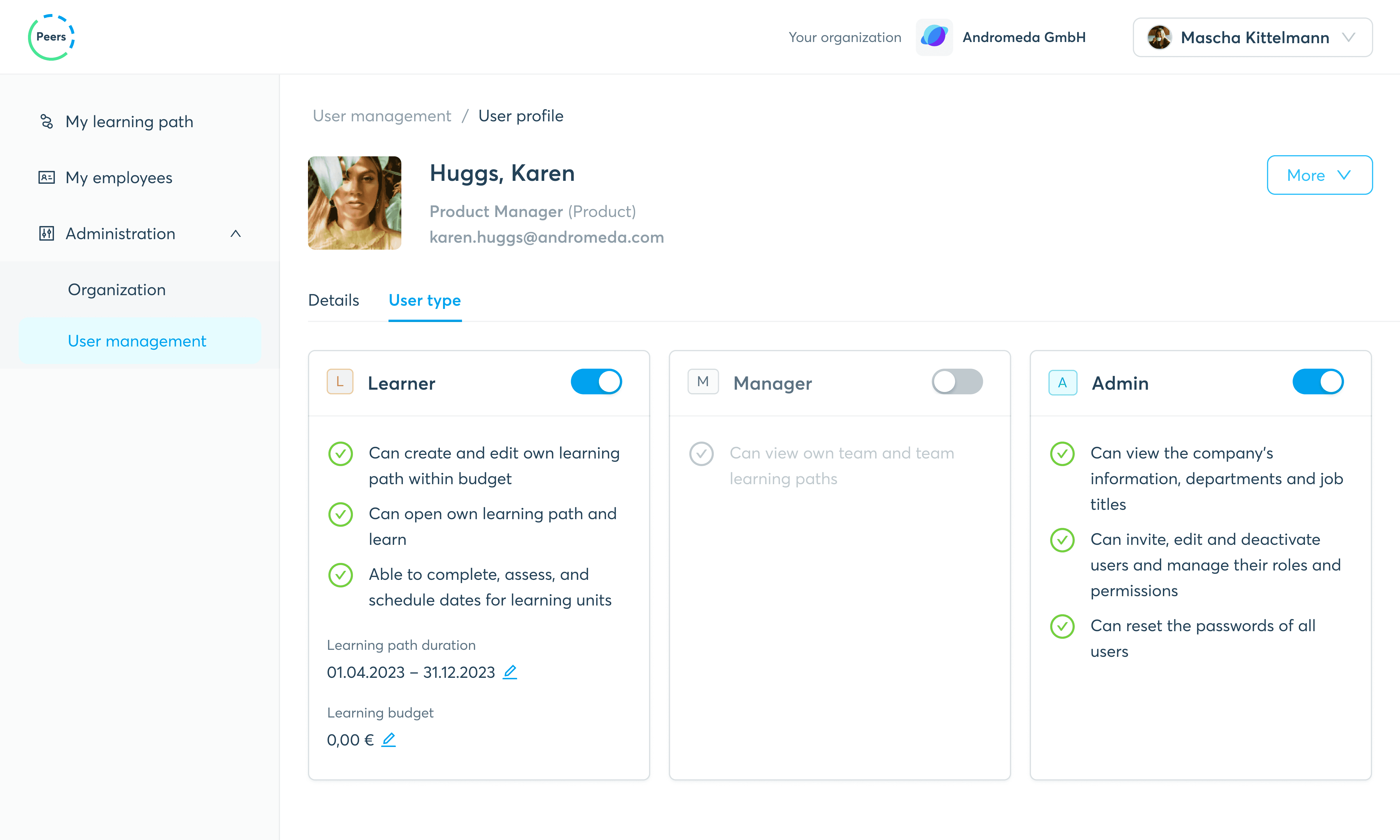
The following screens were part of the overall platform redesign and partially relaunch but fall outside the scope of this case study.
Use buttons < > to navigate mockups